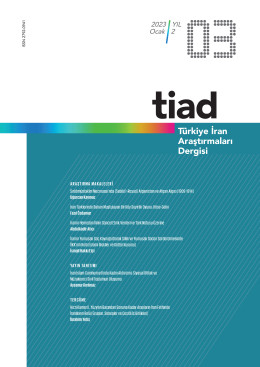
SHIISM AS IRAN’S SOFT POWER SOURCE AND THE MAIN INSTITUTION FOR SUSTAINING SOFT POWER ICRO (ISLAMIC CULTURE AND RELATIONS ORGANIZATION)
Except for hard power based on material power elements, soft power; It defines the attraction that a state creates in the international arena with its historical and cultural values and the benefit it derives from this attraction. Iran also effectively uses the soft power it has created through its historical and cultural heritage, and tries to maximize the benefit it has gained in the international arena thanks to this power. Iran bases a significant part of its soft power on the velayet-i faqih system and the sanctity it has created for itself in the eyes of Shiites, and thanks to this sanctity it has created, it gains great influence over the countries where Shiites live. Iran, which frequently uses its Shiite-centered soft power in its foreign policy in the Middle East, maintains its continuity with some institutions it has created. Islamic Culture and Relations Organization (ICRO) is one of the most important institutions established for this purpose. This institution, which currently has branches in Muslim countries, apart from the London branch; It promotes the historical and cultural values it has in these countries with the events, conferences and seminars it organizes, and tries to create an attraction for Iran or to break the bad perception created in the international arena, especially in Muslim countries. The purpose of this article; The aim is to deal with the soft power that Iran has gained through Shiism and the Islamic Culture and Relations Organization, which it established to ensure the continuity of this soft power. The main conclusion reached in the article; The belief in Shiism is an important source of soft power for Iran, and institutions such as ICRO are trying to ensure the continuity of this power. The historical-descriptive method was used in the article.
Details
The language of the article
Turkish
The type of the article
Research paper
The field of the article
International Relations and Political Science
Published issue
3. Issue
Page
88-109
References
- Armitage, R. L., & Nye, J. S. (2007). CSIS commision on smart power a smarter more secure America. Center for Strategic and International Studies. [Google Scholar]
- Büyükkara, M. A. (2022, Ekim 17). Hamanei’nin yerine kim gelecek, nasıl seçilecek? İRAM. https:// www.iramcenter.org/hameneinin-yerine-kim-gelecek- nasil-secilecek/ [Google Scholar]
- Byman, D., Chubin, S., Ehteshami, A., & Green, J. D. (2001). Iran’s security policy in the post-revolutionary era. Rand Corporation. https://www. rand.org/pubs/monograph_reports/MR1320.html [Google Scholar]
- Chirani, F. K. (2017). An analysis of the role(s) of intercultural dialogue in the foreign cultural policy of Iran and Germany towards each other between 1998 and 2013 [Doctoral Dissertation, Augsburg University]. [Google Scholar]
- Dahl, R. (1957). The concept of power. Behavioral Sciences, (2), 201-215. [Google Scholar]
- Dehghani, S. J., & Nouri, V. (2012). Siyaseti hariciyi Cumhuriyi İslamiyi İran der devranı usulgerayi. Daneşgahi İmam Sadık. [Google Scholar]
- Douglas, J., & Cox, B. (2003). Faith-based diplomacy and preventive engagement. In J. Douglas (Ed.), Faith-based diplomacy: Trumping realpolitik (pp. 11-27). Oxford University Press. [Google Scholar]
- Ekşi, M. (2017). İran’ın transnasyonel ve teopolitik- Şiilik- temelli kamu diplomasisi. Ankasam Bölgesel Araştırmalar Dergisi, 1(2), 46-66. [Google Scholar]
- Elçi, İ. H. (2022). Türkiye ve İran arasındaki düzensiz göç sorunu ve sınır güvenliği [Doktora Tezi, İstanbul Arel Üniversitesi]. [Google Scholar]
- Firouzabadi, S. J. D. (2011). Diplomasiyi Ferhengiyi Cumhuriyi İslamiyi der mıntıkayi haliçi Fars. https://tinyurl.com/s9kbucn7 [Google Scholar]
- Horasanlı, İ. (2020, Mart 23). Devrim sonrası İran’ın Suudi Arabistan Şiileriyle ilişkisi. İRAM. https:// iramcenter.org/devrim-sonrasi-iranin-suudi-arabistan- siileriyle-iliskisi/. [Google Scholar]
- ICRO Iran. (2022). Ayin ve endişe. Tarnemayı sazman- ı serhengi ve irtibatat-ı İslami. https://tinyurl. com/yt7s83s5 [Google Scholar]
- ICRO Iran. (2022). Ayin ve endişe. Tarnemayı sazman- ı serhengi ve irtibatat-ı İslami. https://tinyurl. com/yt7s83s5 [Google Scholar]
- Iran Press News Agency. (2022, July 8). Iran sends humanitarian aid to Afghan families in Balkhab district. https://iranpress.com/content/60865/ iran-sends-humanitarian-aid-afghan-families- balkhab-district. [Google Scholar]
- IRNA. (2020, November 26). Reisi cedidi sazmanı ferhengi ve irtibatat-ı İslami mansub şod. https:// tinyurl.com/2p8jpkpp [Google Scholar]
- IRNA. (2022, Haziran 25). İran Yemen’e korona aşısı göndermeye hazır. https://tinyurl.com/w7vxvyja [Google Scholar]
- İRAM. (2017). Ruhani’nin yeni dönemi. İRAM Analiz. https://iramcenter.org/d_hbanaliz/Analiz_ Ruhaninin_Yeni_Donemi_1.pdf. [Google Scholar]
- İslami İlişkiler ve Kültür Kurumu Tüzüğü. (1995, Ekim 4). https://tinyurl.com/266cz2a7 (shenasname. ir). [Google Scholar]
- Kadercan, B. (2019). Güç. Ş. Kardaş ve A. Balcı (Ed.), Uluslararası ilişkilere giriş (ss. 323-337) içinde. Küre Yayınları. [Google Scholar]
- Kalhor, S., & Sadeghi, M. M. (2010). Investigating the status of cultural diplomacy of the Islamic Republic of Iran: active institutions. Iranian Parliament/Cultural Section (Report No. 10321). [Google Scholar]
- Kamal, A. M. B. (2018). Evaluating the Islamic Republıc of Iran’s public dıplomacy. International Journal of Political Studies, 4(2), 22-39. [Google Scholar]
- Keohane, R. O., & Nye, J. S. (1971). Transnational relations and world politics: An ıntroduction. International Organization, 25(3), 330-331. [Google Scholar]
- Khatami, M. (1998, September 21). ‘Khatami’s speech to the 8th Plenary Session of the 53rd UN General Assembly. UN Documentation Centre. http://www. un.org/documents/a53pv8.pdf [Google Scholar]
- Levitt, M. (2021, July 26). Hezbollah’s regional activities in support of Iran’s proxy networks. The Middle East Institute. https://www.mei.edu/publications/ hezbollahs-regional-activities-support-irans- proxy-networks. [Google Scholar]
- Mardomsalari. (2019, November 18). Bütçeyi 23 nehadı mezhebi ve ferhengi der Sal 99 + infografik. https://tinyurl.com/53ru44t3 [Google Scholar]
- Mehrnews. (2013, September 21). Devlet be astanı kudsu rezevi bedehkar est. https://tinyurl.com/ycyecdrp [Google Scholar]
- Morgenthau, H. J. (1949). Politics among nations: the struggle for power and peace. Alfred A. Knoph. [Google Scholar]
- Nossel, S. (2004, March 1). Smart power. Foreign Affairs. https://www.foreignaffairs.com/articles/ united-states/2004-03-01/smart-power. [Google Scholar]
- Nye, J. S. (2005). Soft power and higher education. http://net.educause.edu/forum/iuf04.asp?bhcp=1 [Google Scholar]
- Nye, J. S. (2007). Notes for a soft power research agenda. In F. Berenskoetter & M. J. Williams (Eds.), Power in world politics (pp. 162-172). Taylor And Francis. [Google Scholar]
- Nye, J. S. (1990). Soft power. Foreign Policy, (80), 153-171. [Google Scholar]
- Nye, J. S. (2004) Soft power and american foreign policy. Political Science Quarterly, 119(2), 255-270. [Google Scholar]
- Nye, J. S. (2009). Küresel çatışmayı ve işbirliğini anlamak. (R. Akman, Çev.), İş Bankası Yayınları. [Google Scholar]
- Reliefweb. (2015, March 23). Iran sends humanitarian aid to Yemen. https://reliefweb.int/report/yemen/ iran-sends-humanitarian-aid-yemen [Google Scholar]
- Rigiderakhshan, M. (2020). İran’ın dış politika kimliğini oluşturan faktörler. Vakanüvis- Uluslararası Tarih Araştırmaları Dergisi, 5(1), 390-410. [Google Scholar]
- Sinkaya, B. (2017). Yeni Ruhani hükûmetinin dış politikası. Ortadoğu Analiz, 9(82), 24-27. [Google Scholar]
- Smith, H. (1994). The illustrated world’s religions: A guide to our wisdom traditions. Harper Collins Publishers. [Google Scholar]
- Smyth, P. (2015, February 2). The Shiite jihad in Syria and ıts regional effects. The Washington Institute for Near East Policy. https://www.washingtoninstitute. org/policy-analysis/shiite-jihad-syria- and-its-regional-effects [Google Scholar]
- Tasnimnews. (2013, Kasım 10) Abuzer İbrahimi Torkmen, cidditerin gozineyi riyaseti sazmanı ferhengi ve irtibatat-ı İslami. https://tinyurl.com/3s- 84rudv [Google Scholar]
- TGRT Haber. (2015, Mayıs 3). İran Yemen’e Umman üzerinden yardım gönderdi. https://www.tgrthaber. com.tr/dunya/iran-yemene-umman-uzerinden-yardim- gonderdi-66493 [Google Scholar]
- Troy, J. (2008). Faith-based diplomacy under examination. The Hague Journal of Diplomacy, 3, 209-231. [Google Scholar]
- Walzer, M. (1967). On the role of symbolism in political thought. Political Science Quarterly, 82(2), 191-204. [Google Scholar]
- Wastnidge, E. (2014). The modalities of iranian soft power: from cultural diplomacy to soft war. Politics, Special Issue, 1-14. [Google Scholar]
- Wellman, D. J. (2016). Religion and diplomacy. In C. M. Constantinou, P. Kerr & P. Sharp (Eds.), The sage handbook of diplomacy (pp. 577-590). SAGE. [Google Scholar]
- Williams, D. (2018, January 2). Top Israeli general sees increased Iran spending on foreign wars. Reuters. https://www.reuters.com/article/us-iran- rallies-israel-idUSKBN1ER0Q9 [Google Scholar]
- Xınhuanet. (2020, July 15). Iran will continue sending aid to Yemen despite Saudi blockade: FM. http://www.xinhuanet.com/english/ 2020-07/15/c_139212746.htm [Google Scholar]
- Yegin, A. (2014). Devrimin 35. yılında İran dış politikası. SETA Perspektif, (32). http://file.setav.org/ Files/Pdf/20140310160331_devrimin-35.-yilinda- iran-dis-politikasi-pdf.pdf [Google Scholar]
- Yılmaz, K. (2021). İran siyasal kültüründe Şia: devrimden günümüze İran siyasetinde Şiiliğin etkisi. İran Çalışmaları Dergisi, 5(1), 103-125. [Google Scholar]
How can this article be cited?
- Elçi, İ. H. (2023). İran’ın yumuşak güç kaynağı olarak Şiilik ve yumuşak gücün sürdürülmesinde İİKK’nin rolü (İslami İlişkiler ve Kültür Kurumu). Türkiye İran Araştırmaları Dergisi, 2(3), 88-109.
2023-3
Year: 2023 /
Issue: 3
15/01/2023